
No. One current retail reference in this style calls a 6 cm brim “short”, while a related 6.25 cm version is sold as mid length. A recent custom brief we received asked for 5–5.5 cm maximum. For development, the number is more useful than the label.
We started writing this down because separate buyers kept describing almost the same fit problem in different words. One wanted a 5–5.5 cm peak with a mid-to-low crown and a raised back. Another wanted the cap to sit higher on the head instead of dropping close to the ears. A New Zealand project focused on a custom 5.5-panel pattern and wanted the development sample to prove the crown, visor and rear adjustment before bulk production.
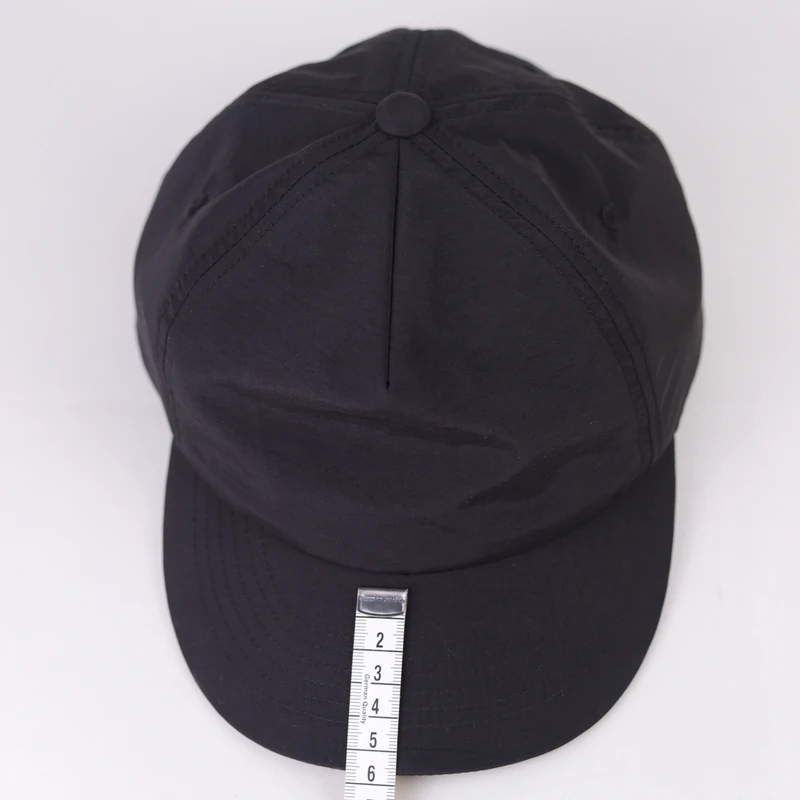
Short brim or short peak: put the finished length on the spec sheet
Australian and New Zealand buyers use both “brim” and “peak”. Either is fine until it becomes the only instruction. On current reference caps in this shape, 6.0 cm and 6.25 cm are both used, but they are not even described the same way. That is enough reason not to build a pattern from the words “short brim” alone.
For a custom sample we record the finished centre-front length from the crown/visor join to the front edge. We also keep the visor width, curve and stitching rows with it. If the target moves from 6 cm to 5.5 cm, simply trimming the front edge is not always enough; the shorter visor still has to look balanced against the crown.
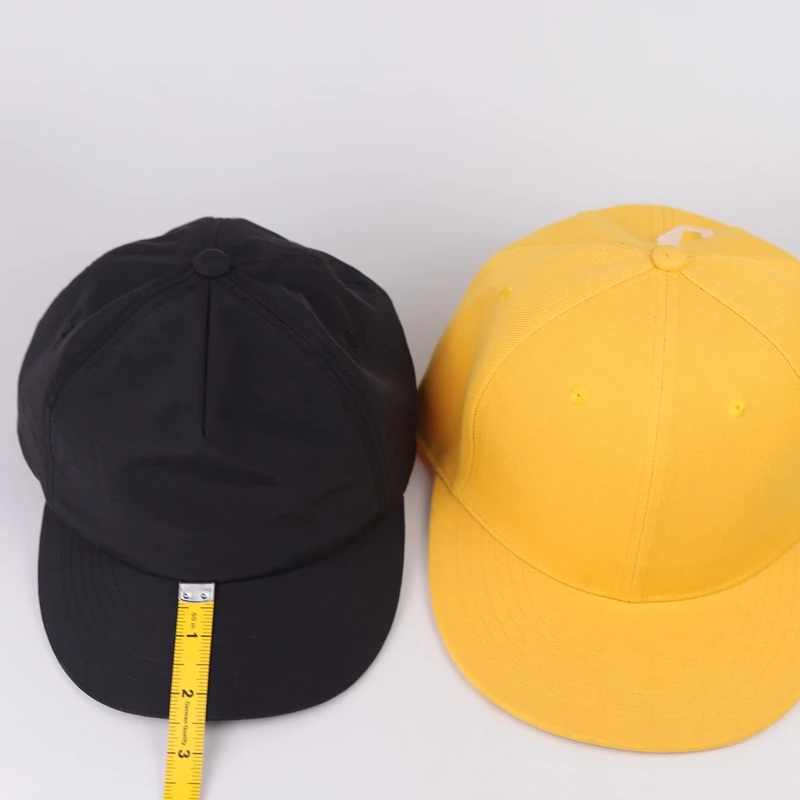
The crown is what decides whether the cap crowds the ears
A shorter visor does not automatically make a cap low profile. One buyer was happy with the general style but wanted less distance from the lower panel edge to the top of the crown, so the cap would sit higher instead of feeling deep around the ears.
That usually means checking front height, side panel depth and the angle of the crown together. Head circumference can stay adjustable while the vertical fit changes. This is also why a side photo tells us more about the intended shape than a front mockup by itself.
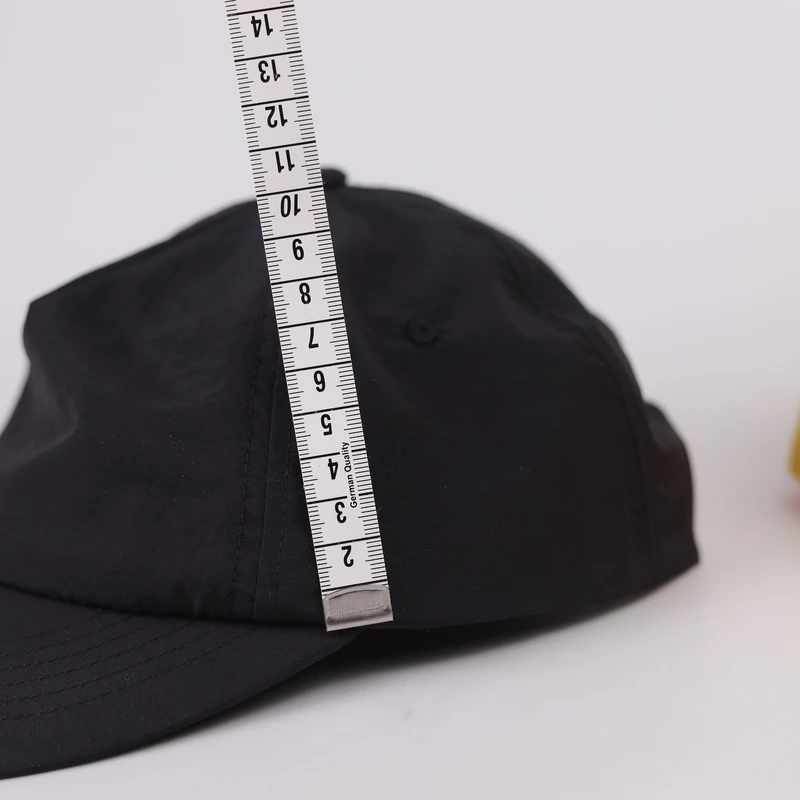
A raised or cropped back has to be built into the pattern
The rear request came up more than once: the cap should look a little more cropped at the back rather than dropping like a standard baseball cap. That is not something a tighter snapback fixes on its own.
We look at rear panel depth, the size and shape of the back opening, closure position and the lower edge beside the opening. When the rear edge moves up, it still has to flow cleanly into the side panels. A side or rear three-quarter reference photo is usually enough to show the intention.
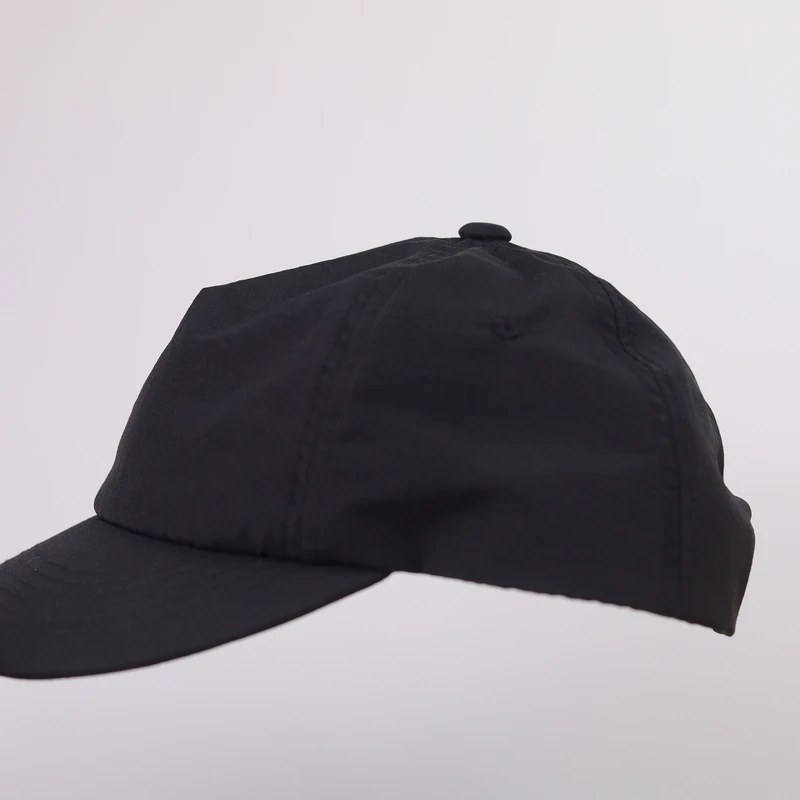
5-panel, 5.5-panel and 6-panel can all produce this silhouette
Panel count is a separate choice. The enquiries behind this note covered 5-panel and 6-panel ideas, and the New Zealand development used a custom 5.5-panel pattern. Current retail references in the same general silhouette also appear in both 5.5-panel and 6-panel constructions.
The difference shows up in front seams, logo space and how the crown is shaped. It does not tell you the brim length or crown height. If a buyer sends a reference photo, we confirm whether the panel layout matters or whether the reference is mainly about fit and proportion.
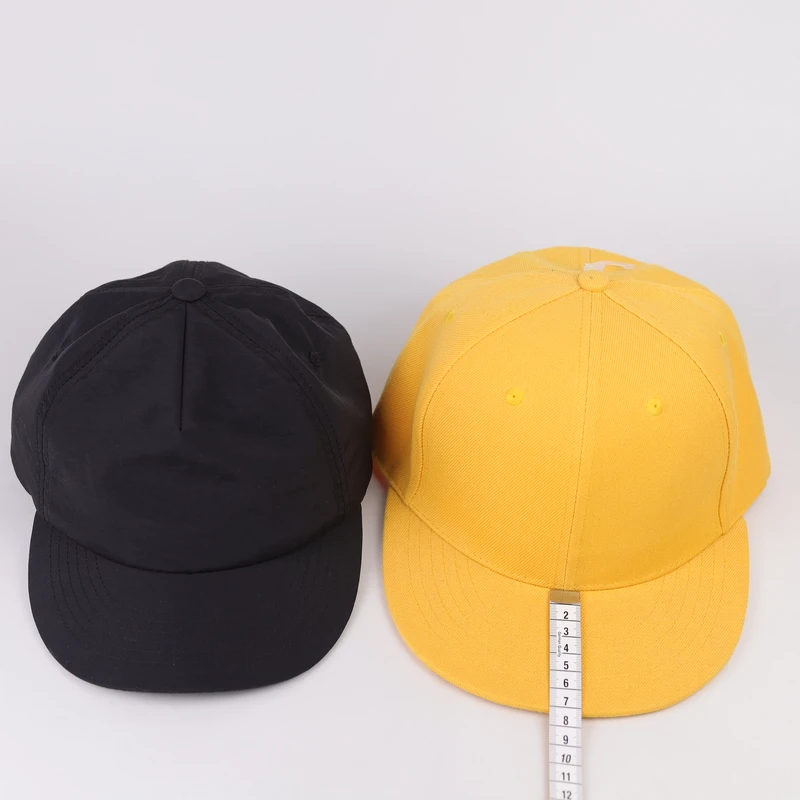
Changing cotton or felt to lightweight nylon changes the feel
Some of the reference caps buyers are sending are cotton canvas or felt. One Australian brief went in a different direction: lightweight waterproof nylon for fitness and everyday wear. The development sample made for that discussion was about 50 g.
The same outline can behave differently when the fabric changes. A soft nylon crown collapses more easily than cotton canvas, so we pay attention to front-panel support, seam tension and whether the visor starts to look visually heavy. For an active cap, sweatband feel and drying behaviour matter as much as the fabric name.
A workable first brief from the recent projects:
5–5.5 cm finished brim/peak · mid/low crown · raised rear profile · lightweight nylon · adjustable closure · 5, 5.5 or 6-panel construction depending on the front shape.
It is enough to start a sample conversation without pretending there is one universal “short-brim cap” block.
What we would actually approve on the development sample
That last point came up directly in the New Zealand project. The buyer was comfortable leaving the inner labels out of the first sample, but still wanted the shell fabric, crown construction, visor, front decoration and adjustment hardware present so the fit and finish could be judged properly.
Common questions buyers ask us about this shape
Can you make the brim shorter than a 6 cm reference?
Yes. A recent brief asked for 5–5.5 cm maximum. Once it gets that short, we would still check width, curve and crown proportion on the physical sample rather than scale only one dimension.
Can you make the cap sit higher and stay away from the ears?
Yes, but the change is in the crown and rear pattern. Reducing panel depth and lifting the rear edge changes the fit in a way that tightening the closure does not.
Is 5-panel or 6-panel better for a low-profile cap?
Neither is automatically better. Choose the front seam and logo area you want, then specify crown height, brim length and rear fit separately.
Do I need a full tech pack before you can review the idea?
No. Front, side and rear reference photos, the target brim length, preferred fabric, logo and quantity are enough for an initial review. The production specification should be locked after the physical sample is approved.
Related production notes
Record note: customer names, prices, addresses and private order details have been removed. The measurements and development questions above come from anonymized project records and physical sample checks.